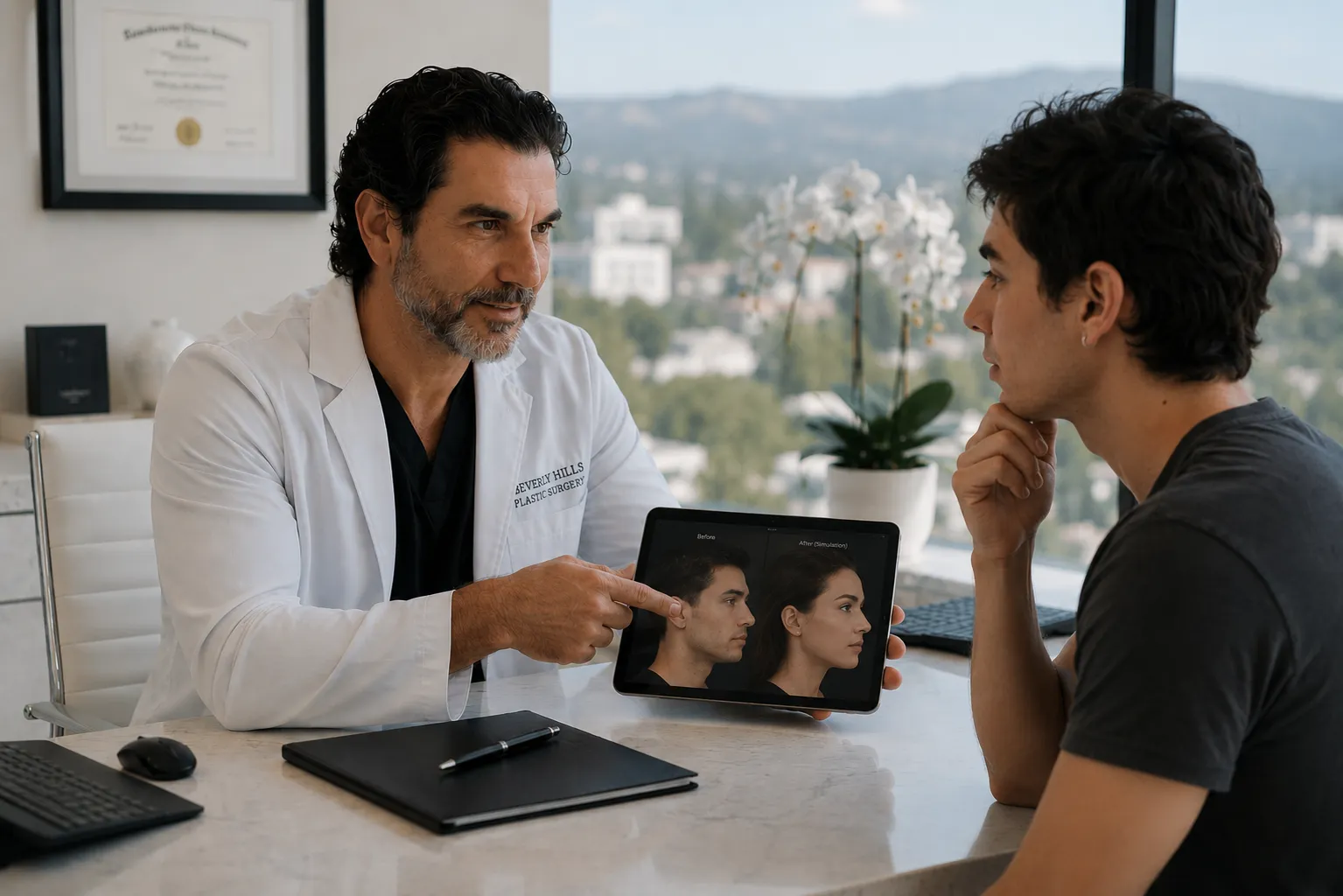
The first consultation for gender affirming surgery is less a medical appointment than a considered conversation — the beginning of a relationship built on trust, precision, and mutual understanding. It is where your goals are heard in full, where anatomy and options are discussed openly, and where a surgical path begins to take shape around you rather than around a template. This initial meeting matters because the decisions made here shape everything that follows: technique, timing, recovery, and the subtle aesthetic details that define a natural result. It is also the moment to ask difficult questions, to weigh risks honestly, and to understand what surgery can and cannot offer. A thoughtful first consultation should leave you better informed, not overwhelmed — with a clearer sense of your body, your options, and the surgeon you are entrusting with them. What follows is a considered guide to preparing for that conversation and knowing what to expect from it.
What Is first consultation gender affirming surgery?
A first consultation for gender affirming surgery is the initial, in-depth conversation between you and your surgeon. It is not a commitment to a procedure, nor a screening test to pass. It is a dedicated space to be heard, to ask questions without hurry, and to understand what surgical care could look like for your body, your goals, and the life you are building.
In practical terms, the consultation covers three things. First, your history — medical background, previous surgeries, hormone therapy, mental and physical wellbeing, and the personal journey that has brought you to this point. Second, your goals — the outcomes you hope for, the results you want to avoid, and the details that matter to you aesthetically and functionally. Third, the surgical landscape — the techniques available for the procedure you are considering, what each one can and cannot achieve, realistic timelines, recovery, risks, and cost.
The context matters. A first consultation sits within a wider pathway that may include hormone therapy, mental health support, referral letters where required, and time to reflect. Some people arrive with years of research behind them; others are only beginning to explore. Both are welcome. The surgeon's role at this stage is to examine where relevant, to listen carefully, and to offer honest, individualised guidance rather than a fixed script.
You should leave the appointment with clearer information, a considered sense of your options, and no pressure to decide anything in the room.
Key Benefits of first consultation gender affirming surgery

The first consultation gender affirming surgery appointment is often described by patients as the moment abstract hopes begin taking tangible shape. Its value lies not in what is decided that day, but in what becomes possible afterward.
A clear understanding of your options. Rather than sifting through fragmented information online, you receive a considered overview tailored to your anatomy, goals, and timeline. Techniques are explained in plain language, along with what each can — and cannot — achieve for you specifically.
A realistic view of outcomes. Photographs, models, and honest conversation help align expectations with what surgery can deliver. This clarity is quietly powerful: it replaces uncertainty with grounded confidence, and it protects you from decisions made on incomplete information.
A personalised roadmap. Every person arrives at this consultation from a different place. Some are early in their journey; others have been preparing for years. The session produces a sequence that makes sense for your life — which procedures, in what order, with what recovery windows, and how they interact with hormones, fertility considerations, or prior surgeries.
Time with the surgeon who will operate. You are not being processed. You are being met. Questions are welcomed at whatever pace you need, and nothing is rushed toward a decision. This is also your opportunity to assess fit — technical skill matters, but so does the sense that you are understood.
Financial and logistical transparency. Costs, timelines, travel, aftercare, and follow-up are laid out clearly, so you can plan without surprises.
A moment to pause. Perhaps the most understated benefit: leaving the consultation with information, not pressure. Many patients describe a settled quiet afterward — the shift from wondering to knowing, and the freedom to move forward on their own terms.
How first consultation gender affirming surgery Works

The first consultation is less a procedure than a conversation — a careful, unhurried exchange designed to understand who you are, what you're seeking, and how surgery might fit into the wider arc of your transition. Here's how it typically unfolds.
Before you arrive. Most practices ask for a brief intake form covering your medical history, current medications, hormone therapy timeline, and any prior surgeries. You may also be asked to share letters of support from mental health professionals, depending on the procedure and regional guidelines.
The private discussion. Your surgeon will begin by listening. Expect open questions about your goals, your body, your timing, and the outcome you're picturing. This is your space to speak plainly — about aesthetic preferences, functional priorities, concerns you've been carrying, or things you've read and want clarified. Nothing is too small to raise.
Clinical review. A focused physical examination follows, tailored to the surgery under consideration. The surgeon assesses anatomy, skin quality, tissue availability, and any factors that might shape the surgical plan. Measurements or clinical photographs may be taken for planning purposes, always with your consent and stored confidentially.
Options laid out. You'll then walk through the techniques appropriate to your case — the differences between them, realistic outcomes, recovery timelines, potential complications, and revision considerations. Good consultations resist rushing this part. You should leave understanding not only what is possible, but what trade-offs each approach carries.
Practical matters. Costs, scheduling, pre-operative requirements (such as smoking cessation or hormone adjustments), and post-operative care are outlined clearly. You'll usually receive written material to review at home.
No decision required. A first consultation is not a commitment. Most people take time afterwards to reflect, ask follow-up questions, or meet a second surgeon before choosing their path forward.
Common Questions About first consultation gender affirming surgery
How long does the appointment last? Plan for 60 to 90 minutes. That window allows a proper conversation, a physical assessment where relevant, and time for your own questions — without the sense of being moved along.
Do I need letters or referrals before I book? Not to attend a consultation. Letters from mental health professionals are typically required before surgery is scheduled, but the first meeting is exploratory. Come as you are.
What should I bring? Any prior medical records, a current medication list, and reference photos if they help you articulate your goals. A written list of questions is welcome — most people forget half of what they meant to ask.
Can I bring someone with me? Yes. A partner, friend, or family member is entirely welcome. Some prefer to attend alone; both choices are respected.
Will I be examined? Usually, yes, though only when relevant to the procedure being discussed. You will be told in advance, a chaperone is offered, and you can decline or pause at any point.
How much does the consultation cost, and is it refundable against surgery? Fees vary by procedure and surgeon. Many practices credit the consultation fee toward the procedure if you proceed. Ask directly when booking.
Am I committing to anything? No. The first consultation is a conversation. You leave with information, a proposed pathway, and time to decide. Booking surgery is a separate, later step — taken only when you feel ready.
Conclusion
Choosing to explore gender affirming surgery is a considered step, and the path begins long before any procedure is scheduled. Your first consultation gender affirming surgery appointment sets the tone for everything that follows — it is where questions are welcomed, timelines are shaped around your life, and a surgical plan begins to take form with care rather than haste.
A few things to hold onto: come prepared with your history and your hopes, but leave room for dialogue. Expect honesty about outcomes, recovery, and readiness. Trust the pace that feels right for you, not the one dictated by urgency or outside voices.
When you feel ready, reach out to arrange a private consultation. Bring your questions, your notes, and whatever context helps you feel understood. From there, the next steps become clearer — thoughtfully, and entirely on your terms.
Learn more about Top Surgery.